Showing posts with label health care. Show all posts
Showing posts with label health care. Show all posts
Saturday, December 03, 2011
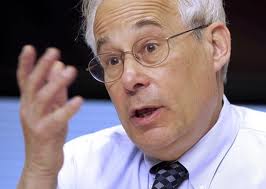
Insider Compares Obamacare to "Moon Shot"


Sunday, March 28, 2010
Health Care Reform -- A Return to Optimism
I've resisted blogging about health care for a while because I wanted to be sure the legislative maneuvering was over before I celebrated the new law's passage. Now, after watching Meet the Press this morning, I feel I have a better sense for the nature of the new law. It is "sweeping social legislation," as the New York Times might put it, and it does represent part of the change that Pres. Obama was elected to bring to the country. But, as one guest on MTP put it this week, it is "the end of the beginning," not the beginning of the end, for health care reform (or the world as we know it). The law will be challenged in states like Nevada, which is "governed" by a man whose sole focus is to maintain the status quo on taxes, no matter how strained the social safety net becomes. I don't expect those lawsuits to amount to much. I do expect that these measured reforms will begin to take effect, and people will begin to notice that the country hasn't fallen off a cliff and the dire consequences predicted by the minority party haven't come to pass. The reforms may not go far enough to curb costs or even improve access, and there is still a lot of confusion out there over what the law actually does. Like every law, it will have unintended consequences. That doesn't mean that the law wasn't necessary to curb abuses among health insurance companies, provide access to health care for millions of uninsured Americans, and cut costs for all of us who pay higher premiums due to the chaotic nature of health care delivery in this country. I wish there were more ways to take some of the burdens of health care off the American worker -- who doesn't hate paying co-pays and doctor's bills for ineffective or unnecessary treatments? -- and I think this new bill takes some steps in that direction. "Medicare for all" has been a rallying cry for the left recently, and it would be a simple solution to a complex problem to just have the government pick up the tab for health insurance for everybody, as they currently do for our elders. That plan would also be enormously expensive, but it would relieve some of the pressure that exacerbates our country's poor health and causes illnesses to lead to bankruptcies. I don't know if we're ready for that reform just yet. Still, it would be nice to know that such reforms were possible, due to renewed trust in government and the ability of the country to solve problems. Let's see if in 2014 or 2018 we still feel as passionately about health care reform as we do now. I'm looking forward to a healthier America -- not only in terms of physical and psychological health but also societal health -- in that near future.
Sunday, August 16, 2009
Blood in the Water: A $35 Trillion Problem
The sharks are circling -- instead of circling the wagons, as I recommended yesterday, the administration appears to be floating the idea of dropping the "public option." Because political reality has shifted to the right, thanks partly to misinformation and partly to legitimate objections to health care reform, the President has shifted his stance just a little bit. This will do little to appease the conservatives and the people who are really scared out there, but it may just enrage the left. Health care reform that works may need a public option; maybe we will see this eventually and add a public option after the other reforms are put into place. I like what Tom Daschle said on Meet the Press this morning:
Despite all the hesitations in there (he was speaking in the heat of debate), he is putting the "price tag" of reform in its proper context. $35 trillion is an unimaginable amount of money -- actually, $1 million is more than people can really fathom -- but if you think about it, that's actually a fairly good estimate of how much money we as a nation will spend on health care in ten years. This fact also makes it difficult for people to understand how they personally will be affected by reform -- most people have no idea how much their employer pays for health care insurance, much less how much the federal government would spend under any health care plan. When they hear $1 trillion as a price tag, it scares them, and rightly so. The problem has gotten so big that the President has to accept some changes to his blueprint in order to get any reform through. Let's see if this change makes any difference in the debate.
keep in mind that over the next 10 years our country’s going to spend $35 trillion on health care. That’s the projection today. That $35 trillion dwarfs the trillion dollars we’re talking about as up-front costs that we have to, have to, to construct in order to put this new infrastructure in place—including, for the first time, covering 50 million new American insured. So I don’t think there’s any question that we can find, within $35 trillion, the savings necessary to come up with part of that cost for the new infrastructure. And I think the president’s plan is, is, is, is about right. It’s, it’s the balance between revenue on one side and cutting costs on the other.
Despite all the hesitations in there (he was speaking in the heat of debate), he is putting the "price tag" of reform in its proper context. $35 trillion is an unimaginable amount of money -- actually, $1 million is more than people can really fathom -- but if you think about it, that's actually a fairly good estimate of how much money we as a nation will spend on health care in ten years. This fact also makes it difficult for people to understand how they personally will be affected by reform -- most people have no idea how much their employer pays for health care insurance, much less how much the federal government would spend under any health care plan. When they hear $1 trillion as a price tag, it scares them, and rightly so. The problem has gotten so big that the President has to accept some changes to his blueprint in order to get any reform through. Let's see if this change makes any difference in the debate.
Thursday, August 13, 2009
'Boots on the Ground' for Health Care
As promised, I went to my Congressperson's office yesterday and told them that I am in favor of health care reform, including a "public option." Strangely, the experience of being "on the record" about health care reform made me less enthusiastic, rather than more so. I can't really explain why, but the whole experience was pretty underwhelming. I even consented to be videotaped with my reasons why I'm in favor of health care reform, but I really don't think that video will be seen by anybody. Maybe I'm a pessimist, but I don't think that what I did will have that big of an impact.
Maybe I'm an idealistic pessimist -- a strange combination, but it explains a lot about me. Anyway, I still believe in health care reform, but I'm less die-hard than I was just a few days ago. There are many good ideas about how to improve the lives of Americans, and health care reform is a big, good idea. I just see it now getting bogged down in the nitty gritty of legislative work, and the campaign-style events the President is hosting are inspiring, but they leave a little of the hard work still to be done. My inner policy wonk is now saying, what about the details?
Maybe I'm an idealistic pessimist -- a strange combination, but it explains a lot about me. Anyway, I still believe in health care reform, but I'm less die-hard than I was just a few days ago. There are many good ideas about how to improve the lives of Americans, and health care reform is a big, good idea. I just see it now getting bogged down in the nitty gritty of legislative work, and the campaign-style events the President is hosting are inspiring, but they leave a little of the hard work still to be done. My inner policy wonk is now saying, what about the details?
Friday, August 07, 2009
Does ObamaCare mean that Obama cares?
There is something worth asking in the silly debate over what to call health care reform -- "ObamaCare," "health insurance reform," or something else. The question is in the title of this post. First, some background. In labeling the program ObamaCare, conservatives are trying not only to tie the reform to the President, making him the face of reform while minimizing the importance of other players like Congress, but also to make it personal for people. "If you don't like Obama, you won't like ObamaCare," the conservatives are saying, "and if you don't like ObamaCare, you don't like the President." This messaging is effective, and it gets people riled up. Having effectively tied the President to the reform, the conservatives are now "going after" Congress with angry mobs. Liberals are trying to calm passions by referring to their efforts as "health insurance reform," pinning blame for problems on the insurance industry and trying to get credit for fixing those problems. The liberals have reached a fork in the road where their promises have to be met within the realm of political reality. Political reality is an ever-shifting bed of sand, not a fixed point, but the reality is that the President promised change, and now he is trying to deliver. My point of view is still one that hopes the President is really acting on behalf of average Americans -- that his approach and his proposals are firmly rooted in fixing problems with the system, not in political pandering or in some of the worst things he is accused of wanting. In other words, I don't think the President is out to kill old people and babies. Hardly a ringing endorsement, I know, but conservatives have yanked the debate about health care into an alarming arena of shouting matches and physical confrontation by stoking fears about change. Reasonable people can disagree, as my friend Garden Gal and others I have talked to about this issue probably do, but change is always hard, and I think this particular change is badly needed. Health care is simply too expensive in this country. Any program that can truly reverse the trend of rising health care costs, cover more Americans, and allow Americans to have choices in their health care is welcome in my book. Now, some may accuse me of believing the President's promises instead of the reality, but a comparison of the status quo and the reform proposals leads me to believe that this country can afford ObamaCare, should adopt the best possible reform that has a chance of passing Congress, and need not fear the majority of the problems that the conservatives are raising. I know I need to question Pres. Obama's motives more in this arena -- I know there has to be more to the story than just the good of the country, but something tells me that Pres. Obama wouldn't take on a fight of this magnitude if he didn't strongly believe it was necessary to bring the country onto a more solid footing.
Thursday, July 09, 2009
Health care debate heats up
David Brooks has some thoughts on how health care incentives are driving up costs, and how from his perspective the bills in Congress will make things worse instead of better. I think this is a pivotal debate -- will the "public option" and all the reforms that Pres. Obama is pushing actually cut down costs? I don't know the answer to this question, but I do know that if we don't cut down costs, we're all in trouble. The policy wonks who are designing the reforms right now are interceding in such a large part of the economy that the numbers are pretty scary -- more than a trillion dollars, by some estimates. Let's hope they get it right.
Monday, June 11, 2007
No simple answers
Improving health care efficiency is a big selling point in most Democratic plans for revamping the health care system. Private efforts so far have been mixed, according to this NYT article. The article points out that the initial investment can be steep when improving efficiency in the long run. So, how do the Democrats' health care plans generate the dollars they need to improve efficiency? And how do they translate these efficiency improvements into the dollars needed to insure more Americans? These are tough questions, and the answers aren't simple. Tax increases are likely to fund these health care plans.
Here are the plans:
Clinton / Edwards / Obama
Edwards' and Obama's plans are much more detailed than Clinton's. Clinton basically promises universal coverage without saying how she plans to get there. Edwards and Obama have similar outlines but different specifics: regional pools (Edwards) vs. a "national health exchange" (Obama). Edwards requires individuals to purchase insurance, while Obama only requires coverage for children. Both require employers to either purchase health insurance for employees or pay taxes to support the government plan. Obama promises subsidies to help people pay for health insurance, while Edwards favors tax breaks. Edwards' outline is nice: everyone has a "responsibility" under his plan. Obama has the same basic principles, and the overarching goal of a "healthy America" comes through more in Obama's text. Still, I wish for a more coherent "vision" in Obama's plan, to go with the point-by-point specifics.
Here are the plans:
Clinton / Edwards / Obama
Edwards' and Obama's plans are much more detailed than Clinton's. Clinton basically promises universal coverage without saying how she plans to get there. Edwards and Obama have similar outlines but different specifics: regional pools (Edwards) vs. a "national health exchange" (Obama). Edwards requires individuals to purchase insurance, while Obama only requires coverage for children. Both require employers to either purchase health insurance for employees or pay taxes to support the government plan. Obama promises subsidies to help people pay for health insurance, while Edwards favors tax breaks. Edwards' outline is nice: everyone has a "responsibility" under his plan. Obama has the same basic principles, and the overarching goal of a "healthy America" comes through more in Obama's text. Still, I wish for a more coherent "vision" in Obama's plan, to go with the point-by-point specifics.
Subscribe to:
Posts (Atom)